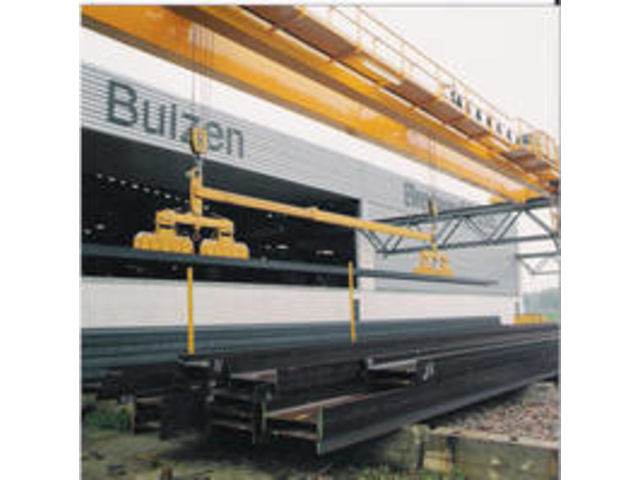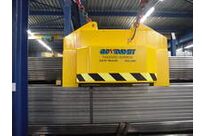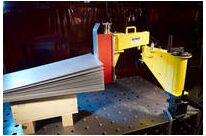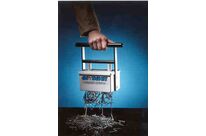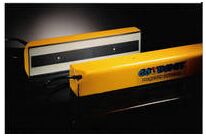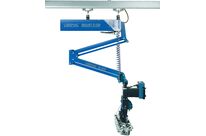

Angled sections and tubes often have only a very small surface area to which a magnet can be attached. Goudsmit therefore developed the bipolar lifting magnet, which exerts the greatest force in the centre of the pole. The bipolar magnets combine minor dimensions with substantial magnetic force, so that they can be precisely positioned and can also effortlessly transport long angled sections. As the two magnets in a bipolar lifting magnet are quite some distance apart, while the workpiece is relatively narrow, the traverse must meet quite stringent requirements. The magnets must always be aligned. They are therefore fixed to the traverse, and can onl move in one direction (parallel to the traverse).
See also
Buyers
Find your suppliers Complete your request and let our teams find you the best deals available.Suppliers
Find your future clients List your products and services to enhance your web presence and receive qualified enquiries.