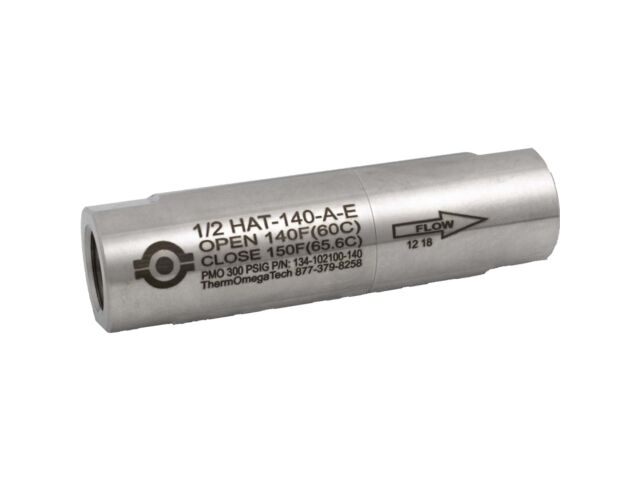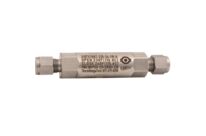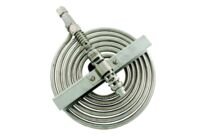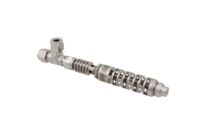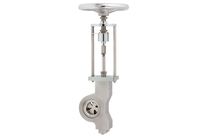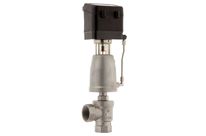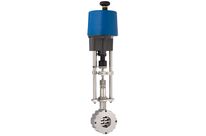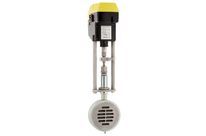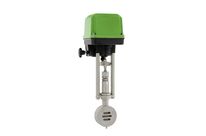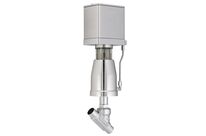

Within the valve, a thermal actuator constantly monitors the fluid temperature. When the temperature drops below the valve’s set point, the valve opens to initiate flow. Conversely, when the temperature increases to the set point, the valve modulates closed. HAT valves can be equipped with built-in leakage to enable bypass flow when necessary.
HAT valves will maintain the discharge temperature in glycol heat tracing systems. When the glycol temperature exceeds the valve’s set point, the valve will modulate closed. As heat loss occurs and the glycol cools to below the set point, the valve reopens to allow warmer glycol to circulate.
HAT valves can act as freeze protection for condensate systems. The valves open when temperatures fall to allow condensate to discharge before freezing.
On commercial aircraft, high temperature water can unexpectedly travel to the cold water lines. HAT valves installed on cold water lines will limit flow when excessive temperatures are detected, preventing scalding of passengers and crew.
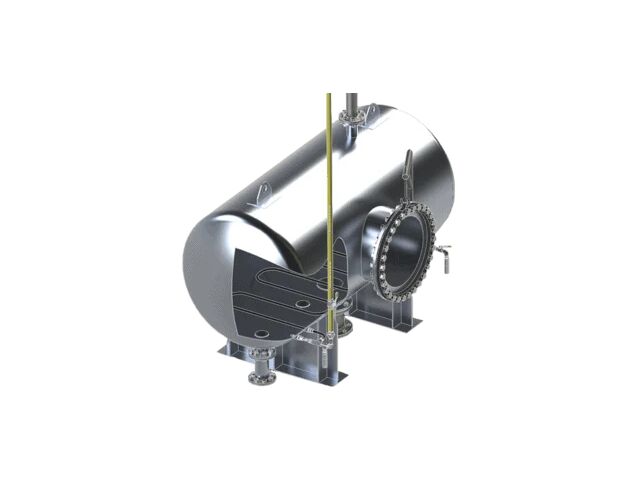
HAT valves used on tank heating coils limit the temperatures of the heating element. By closing before coil temperatures are too high, the the valves reduce the risk of over-temperature damage. When used as a subcooling steam trap, HAT valves reduce problems associated with overheating.
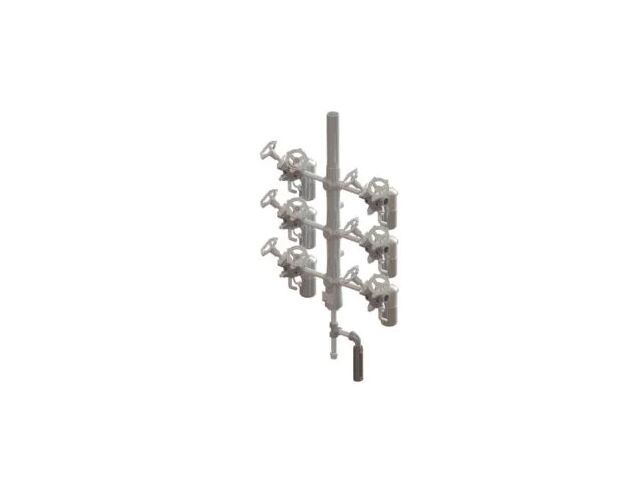
In a sampling system, HAT valves will remain open under normal conditions. However, if the sample temperature goes above the valves’ set point, it automatically shuts off flow to prevent potential damage to the analyzing equipment.
Any industry
Glycol thermal tracing
Freeze protecion
Steam Trap